November 23, 2013
Minister Clement Promotes the Canadian Open Data Experience (CODE) with Tech Students in the Waterloo Area
The Honourable Tony Clement, President of the Treasury Board, recently spoke about the Government of Canada’s first national appathon, the Canadian Open Data Experience (CODE), to students and data enthusiasts at Wilfrid Laurier University and the University of Waterloo.
“Our Government is promoting and supporting CODE to encourage entrepreneurial innovation that leads to the start-up of new business, economic expansion and job creation,” said Minister Clement. “Innovations like the apps created at CODE will ensure Canada remains at the forefront of the global Open Data movement.”
The Canadian Open Data Experience will appeal to innovators, students, technology experts and developers, who will be challenged to use and explore roughly 200,000 datasets on data.gc.ca, the Government of Canada’s Open Data Portal. The contest will take place next February, and will encourage participants to create apps that solve real world problems for the benefit of Canadians.
 One of the leaders we most admire in Web 2.0 government world is Nick Charney
  How you tell the story of something whether your best friend’s recent golf incident – or the introduction of a new paradigm into an old channel matters. It matters more and more so in the instant gratification and short time frame attention span economy. How our brains process information now is based on how fast does it answer basic questions. If you cannot tell the story of why something should be done using outside references then figure out how to tell the story using those from inside.
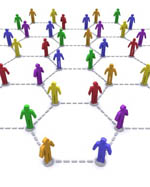 Abstract: Developing the appropriate behaviors and competencies to integrate into society is a crucial test for any concept of citizenship1. Virtual society today is a connected community of global citizens thriving across multiple platforms and social networks. People are dispersed geographically, culturally and politically and are unconstrained by whom they interact with and why they interact. In virtual worlds, the borders are fluid and physically unconstrained. The personal surrogate encoded as an avatar can move about freely and participate in dynamic, multiple states at the same time. The avatar is valued more for his performance, skill and abilities in the context of the virtual world, rather than by his race, pay grade or political affiliation.
 Beginning on February, 2nd 2011 at 8:00pm eastern we are pleased to announce that right here on
  I recently came across this funny (and too true) post by